
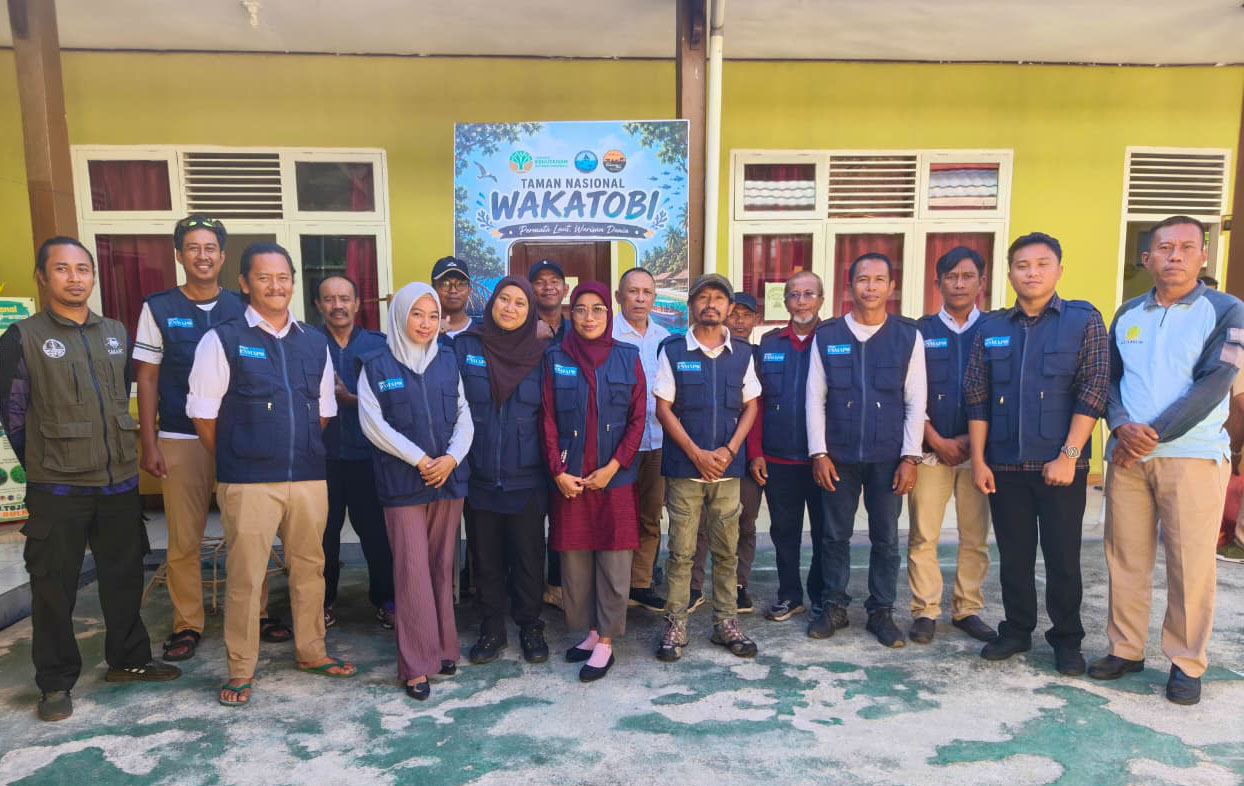
WAKATOBI, Indonesia – The ASEAN ENMAPS Project successfully conducted a Training on Community-Based Monitoring, Control and Surveillance (MCS), SMART Patrol, Marine Resource Monitoring, and Diving Certification in Wakatobi National Park from 15 to 20 August 2026, bringing together 52 National Park officers and local community representatives to strengthen collaborative marine conservation efforts in one of the world’s most important marine biodiversity hotspots.
The training forms part of the ASEAN ENMAPS Project’s efforts to improve the management effectiveness, governance, and sustainability of marine protected areas (MPAs) across the ASEAN region through enhanced capacity development, knowledge sharing, and stakeholder engagement. In Indonesia, the project supports priority conservation sites, including Wakatobi National Park, which is internationally recognised for its exceptional marine biodiversity and extensive coral reef, seagrass, and mangrove ecosystems.
As part of the Coral Triangle, Wakatobi National Park plays a vital role in maintaining marine biodiversity, ecological connectivity, and fisheries productivity. The park also supports the livelihoods of coastal communities through fisheries, marine tourism, and other marine-based economic activities. Ensuring the health of these ecosystems is therefore critical not only for biodiversity conservation but also for sustaining local livelihoods and economic development.
The training was designed in response to priorities identified through the Management Effectiveness Tracking Tool (METT) assessment, which highlighted the need to strengthen marine resource monitoring, ecological data collection, and MCS systems within the park. The assessment also underscored the importance of increasing community participation in conservation and monitoring activities to enhance management effectiveness across the park’s vast marine area.
During the five-day programme, participants were introduced to community-based MCS approaches and trained in the use of the SMART Patrol system, a digital platform that supports field-based monitoring, surveillance, and reporting activities. The training equipped participants with practical skills to detect and report threats, monitor resource conditions, and contribute valuable information for evidence-based park management.
The programme also provided opportunities for National Park officers and community representatives to work together through field-based monitoring activities, fostering stronger collaboration between local communities and park authorities. By promoting shared responsibility for marine resource management, the training helped strengthen trust, communication, and stewardship among stakeholders whose livelihoods are closely linked to the health of Wakatobi’s marine ecosystems.
Recognising the importance of underwater ecosystems to both conservation and tourism, the training further included diving certification and safety awareness sessions. Participants enhanced their diving competency and gained practical experience in conducting underwater monitoring activities, enabling them to safely collect ecological data and support surveillance efforts in marine habitats throughout the park.
Through this capacity-building initiative, ASEAN ENMAPS contributed to expanding the skills and knowledge of both government personnel and community members, supporting a more inclusive and effective approach to marine conservation. The strengthened capacity for monitoring, surveillance, and ecological data collection is expected to support evidence-based decision-making and improve the long-term management of Wakatobi National Park.
By empowering local stakeholders to take a more active role in protecting marine resources, the initiative reinforced the importance of community participation in conservation and highlighted the value of collaborative approaches in safeguarding the ecological integrity and economic benefits of one of Indonesia’s most significant marine protected areas.
The ASEAN ENMAPS Project, funded by the Global Environment Facility (GEF), implemented by the United Nations Development Programme (UNDP), and executed by the ASEAN Centre for Biodiversity (ACB), continues to support efforts to strengthen networks of MPAs across the ASEAN region through science-based management, capacity development, and stakeholder engagement.
