
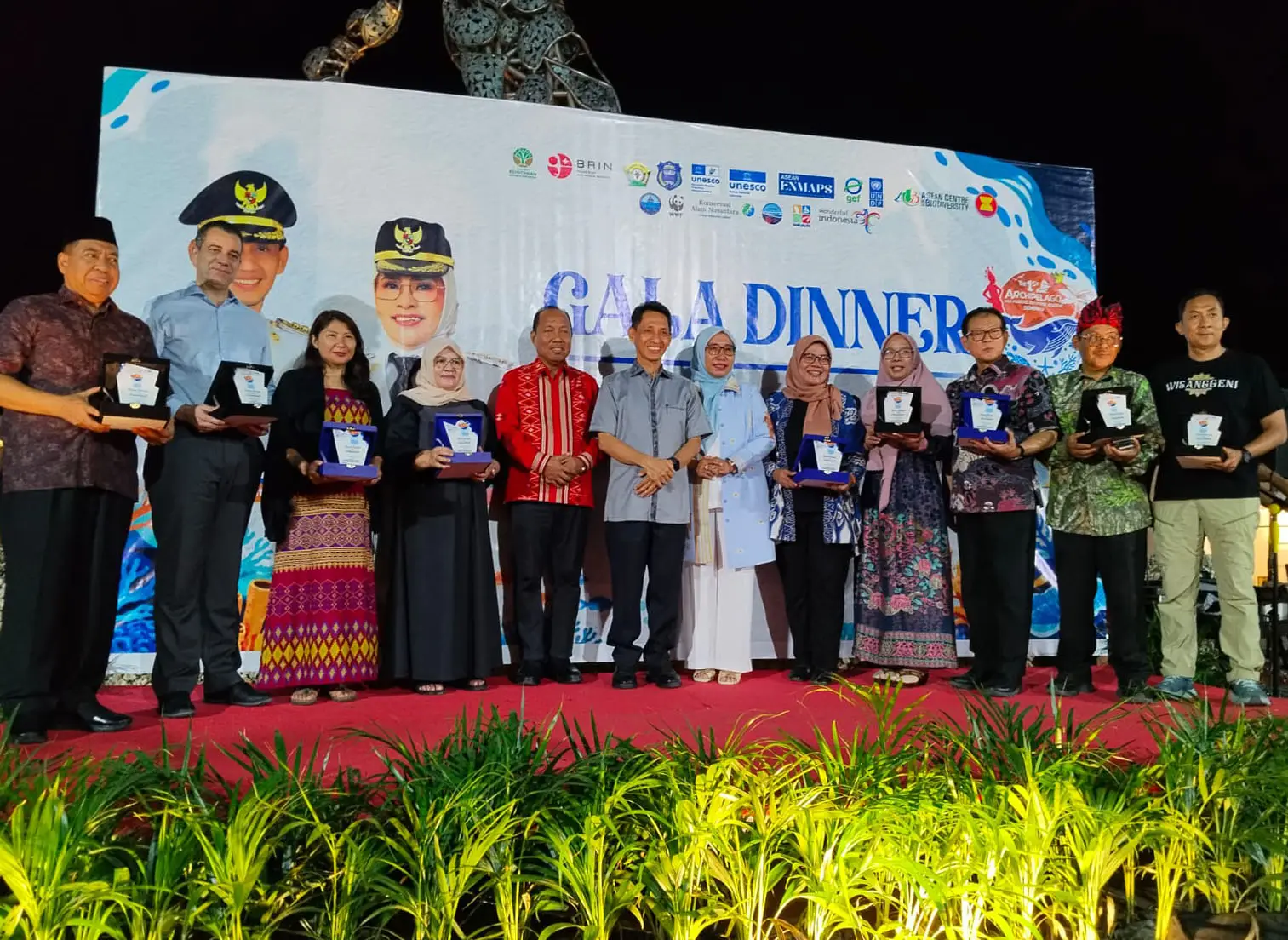
Wakatobi, Indonesia – Strengtheningmarine conservation through science, collaboration, and community participation, the ASEAN Centre for Biodiversity (ACB), through the project Effectively Managing Networks of Marine Protected Areas in the Large Marine Ecosystems of the ASEAN Region (ASEAN ENMAPS), participated in the 1st Archipelago and Marine Biosphere Reserve Seminar (1AMBRS), held in Wakatobi, Indonesia, on 6–8 November 2026.
Anchored on the theme, “Integrating Land and Coastal Innovative Management for Climate-Resilient and Sustainable Biosphere Reserves,” the seminar brought together approximately 150 participants from government institutions, research organisations, universities, Biosphere Reserve management authorities, local communities, civil society organisations, the private sector, media, and youth groups. It provided a platform for exchanging knowledge, sharing innovative approaches, and strengthening partnerships for the sustainable management of Biosphere Reserves.
The seminar also highlighted the importance of the Wakatobi Biosphere Reserve as an integrated approach to biodiversity conservation and sustainable development. By bringing together scientific knowledge, ecosystem management, and stakeholder collaboration, the Biosphere Reserve demonstrates how conservation and sustainable livelihoods can be advanced through coordinated action across terrestrial, coastal, and marine ecosystems.
As part of the seminar, ASEAN ENMAPS shared its scientific findings and project experiences through an expert presentation entitled “ASEAN ENMAPS: Understanding Ecological Connectivity in the ASEAN Marine Ecosystems.” The presentation highlighted the importance of ecological connectivity in understanding relationships among marine habitats and protected areas, providing a scientific basis for strengthening marine protected area (MPA) management and developing connected MPA networks.
In Indonesia, ASEAN ENMAPS focuses on Wakatobi National Park and Togean National Park, two important marine conservation areas characterised by rich biodiversity, valuable coastal and marine ecosystems, and communities whose livelihoods are closely linked to marine resources. Through its work on ecological connectivity, the project seeks to strengthen the management and governance of MPAs, MPA networks, and associated marine corridors, recognising that marine ecosystems and the species they support extend beyond individual protected area boundaries.
The presentation underscored the importance of translating scientific findings into practical management approaches and collaborative conservation actions. It also provided an opportunity to engage Biosphere Reserve managers, government agencies, researchers, and other stakeholders on how ecological connectivity can inform marine spatial planning, protected area management, and the establishment of MPA networks. These approaches are particularly relevant to Wakatobi, where strengthened coordination and collaboration can contribute to more effective and integrated marine ecosystem management.
Beyond the technical discussions, ASEAN ENMAPS supported public awareness and engagement through a conservation photo exhibition showcasing Wakatobi’s marine biodiversity, conservation initiatives, and community participation in sustainable marine resource management. The exhibition highlighted the connections between healthy marine ecosystems, local livelihoods, and community-led conservation efforts, while illustrating how local conservation initiatives contribute to the broader ASEAN marine ecosystem.
The project’s participation also contributed to the seminar’s wider efforts to promote youth and community involvement in Biosphere Reserve management, including initiatives to establish the Indonesia Man and the Biosphere (MAB) Youth Forum and the Wakatobi Biosphere Reserve Youth Forum. These initiatives recognise the important role of young people and local communities in advancing biodiversity conservation and building climate-resilient and sustainable communities.
Through its participation in 1AMBRS, ASEAN ENMAPS reinforced the importance of collaborative management in achieving effective marine conservation. Bringing together government institutions, protected area managers, scientific institutions, local communities, civil society, the private sector, and youth creates opportunities to share good practices, strengthen institutional capacities, and translate knowledge into coordinated action. The engagement further strengthened the connection between the project’s ecological connectivity work and the integrated conservation and development objectives of the Wakatobi Biosphere Reserve. By promoting science-based decision-making, knowledge exchange, and inclusive stakeholder participation, ASEAN ENMAPS continues to support efforts towards resilient marine ecosystems and sustainable livelihoods across the ASEAN region.
