
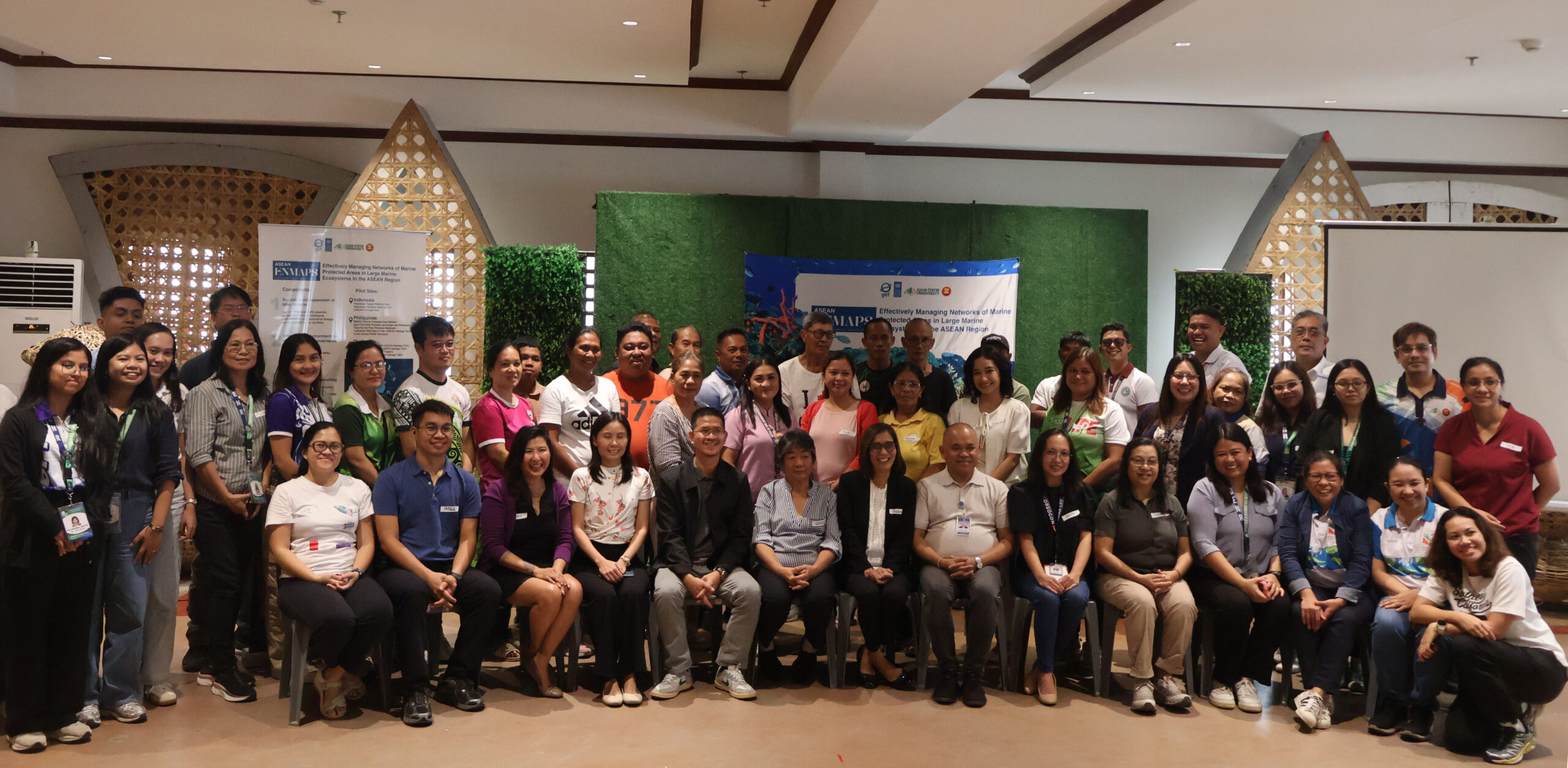
Donsol and Pilar, Sorsogon, Philippines – The ASEAN Centre for Biodiversity (ACB), through the ASEAN ENMAPS Project, conducted a field mission to the Ticao-Burias Pass Protected Seascape (TBPPS) from 4 to 7 August 2026 to formally mobilise project activities, engage stakeholders, and gather critical inputs for the establishment and effective management of a marine protected area network in one of the Philippines’ most ecologically significant seascapes.
The field mission brought together representatives from national and local government agencies, Indigenous Cultural Communities, fisherfolk groups, civil society organisations, and other key stakeholders to strengthen collaboration and ensure that future interventions are informed by local knowledge, community priorities, and scientific evidence.
Launching ASEAN ENMAPS Activities in TBPPS
The mission commenced in Donsol, Sorsogon, where stakeholders gathered for an orientation on the ASEAN ENMAPS Project and its integrated stakeholder perception mapping approach. Participants were introduced to the project’s objectives and activities, which aim to enhance the management of networks of marine protected areas and marine corridors across selected large marine ecosystems in Indonesia, the Philippines, and Thailand.
The programme also featured presentations on the latest findings of the project’s Connectivity Study, demonstrating how connectivity science can support the design of marine protected area networks and contribute to sustainable fisheries management. Participants engaged in discussions on the relevance of these findings to the management of the Ticao-Burias Pass Protected Seascape and explored opportunities for collaboration among various stakeholders.
Upholding Indigenous Peoples’ Rights through FPIC
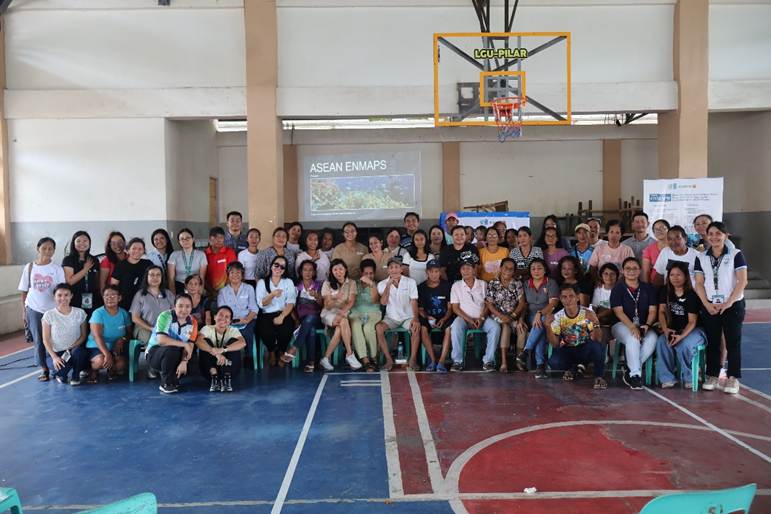
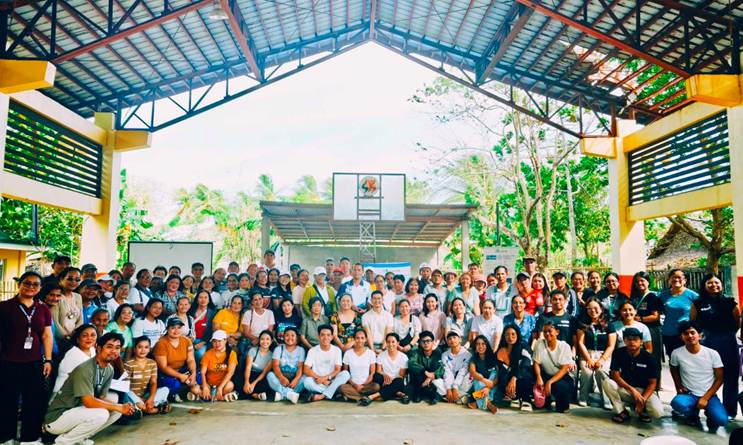
In line with the project’s commitment to social and environmental safeguards, Days 2 and 3 of the mission were dedicated to securing the Free, Prior, and Informed Consent (FPIC) of Indigenous Peoples (IPs) within the pilot site. IP Assemblies were conducted in Pilar and Donsol, bringing together Indigenous Cultural Communities, local government units, national government agencies, and project partners to facilitate meaningful dialogue on the ASEAN ENMAPS Project and its proposed interventions.
During the assemblies, participants identified priority actions and strategies, drafted resolutions and agreements, and discussed pathways for ensuring that Indigenous Peoples’ rights, traditional knowledge, and aspirations are meaningfully integrated into marine protected area network planning and management. The process reinforced ASEAN ENMAPS’ commitment to inclusive, rights-based, and community-centred approaches to marine biodiversity conservation.
Stakeholder Perception Mapping for Inclusive Marine Conservation
The final day of the mission focused on integrated stakeholder perception mapping, a participatory process designed to gather insights from diverse stakeholder groups and inform the development of an effective and inclusive marine protected area network. Representatives from government agencies, local communities, Indigenous Peoples, fisherfolk groups, and other sectors participated in a series of facilitated workshops in Donsol.
The workshops explored key themes including fisheries and marine resource use, marine protected area network design, biodiversity threats, Social and Environmental Standards Assessment, stakeholder analysis, livelihoods and gender roles in the value chain, grievance redress mechanisms, and Indigenous governance systems and traditional ecological knowledge.
The discussions culminated in a plenary session where participants consolidated recommendations, reviewed ongoing marine protected area initiatives, identified policy priorities, and proposed strategic actions to support the establishment of a resilient and ecologically connected marine protected area network within the seascape.
Supporting Effective Marine Protected Area Networks
The Ticao-Burias Pass Protected Seascape is among the pilot sites of the ASEAN ENMAPS Project in the Philippines. Through stakeholder engagement, scientific assessments, and participatory planning processes, the project seeks to strengthen marine protected area governance, improve ecological connectivity, and support sustainable fisheries and biodiversity conservation across the ASEAN region.
Funded by the Global Environment Facility (GEF), implemented by the United Nations Development Programme (UNDP), and executed by the ASEAN Centre for Biodiversity (ACB), the ASEAN ENMAPS Project continues to advance collaborative and science-based approaches to marine conservation while ensuring that local communities and Indigenous Peoples remain at the centre of decision-making processes.
